AWS architecture template
AWS EKS microservices
Amazon EKS behind an Application Load Balancer, with ECR images built by CodeBuild, Aurora, ElastiCache and IAM pod roles.
Free to start. Updated .
When to use it
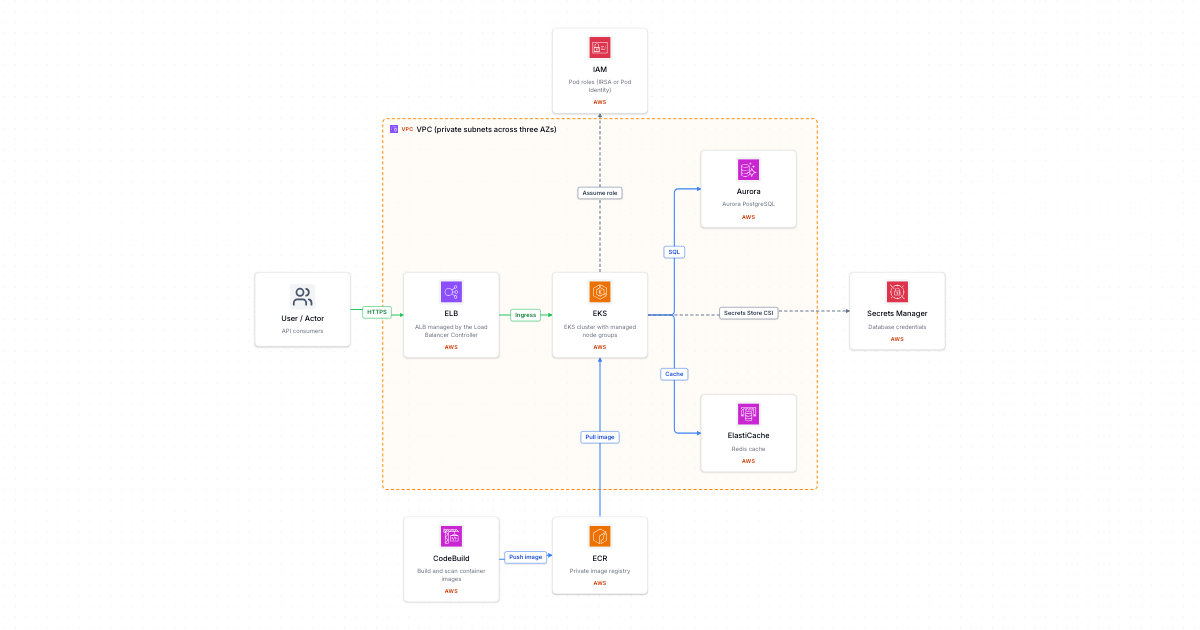
Pick this template when several teams ship containerised services and want one Kubernetes platform to share. The EKS cluster runs in private subnets across three Availability Zones, and the AWS Load Balancer Controller creates the Application Load Balancer from Kubernetes Ingress objects. CodeBuild builds and scans images and pushes them to ECR, and the cluster pulls from there. Each workload assumes its own IAM role through IRSA or EKS Pod Identity, and reads its database credentials from Secrets Manager through the Secrets Store CSI driver. Add CloudWatch Container Insights for cluster metrics and logs.
Kubernetes buys portability and a rich ecosystem at the price of real platform work: cluster upgrades, add-on versions, node scaling and network policy all become your job. If you only run a handful of services, ECS on Fargate gives you most of the benefits with less to operate. Keep stateful data in Aurora and ElastiCache rather than inside the cluster.
What's in this template
 User / ActorAPI consumers
 IAMPod roles (IRSA or Pod Identity)
 ELBALB managed by the Load Balancer Controller
 EKSEKS cluster with managed node groups
 AuroraAurora PostgreSQL
 ElastiCacheRedis cache
 Secrets ManagerDatabase credentials
 CodeBuildBuild and scan container images
 ECRPrivate image registry
How it connects
- User / Actor → ELB (network): HTTPS
- ELB → EKS (network): Ingress
- EKS → Aurora (data): SQL
- EKS → ElastiCache (data): Cache
- CodeBuild → ECR (data): Push image
- ECR → EKS (data): Pull image
- EKS → Secrets Manager (dependency): Secrets Store CSI
- EKS → IAM (dependency): Assume role
More AWS templates
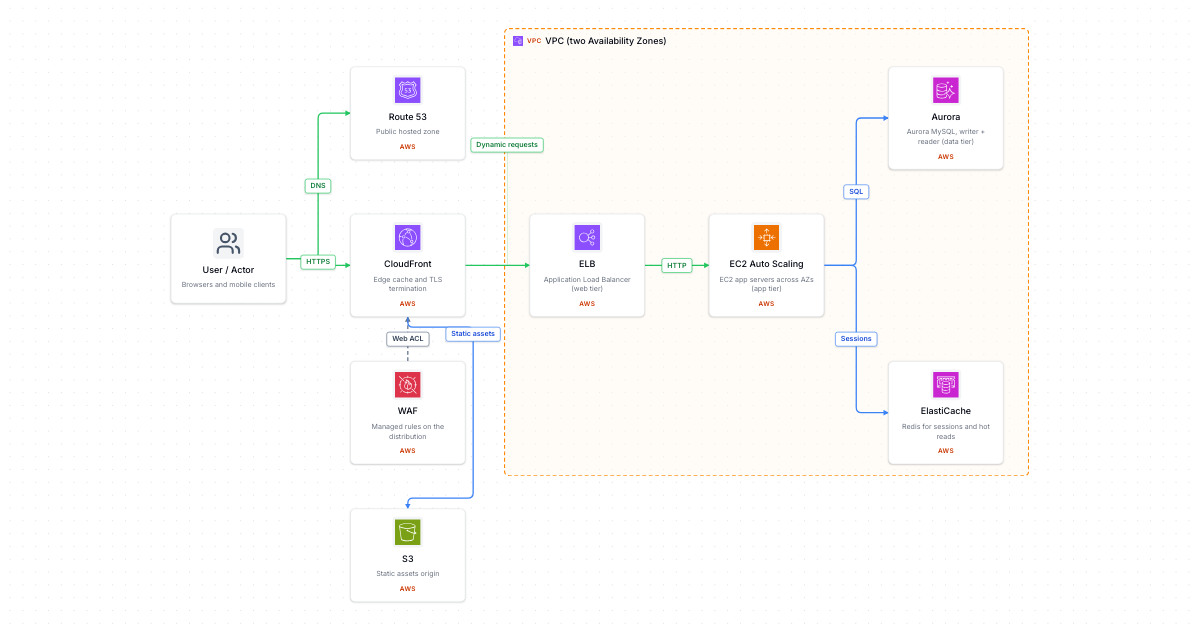
AWS 3-tier web app
CloudFront and WAF in front of an Application Load Balancer, EC2 Auto Scaling app servers, Aurora and ElastiCache in a VPC.
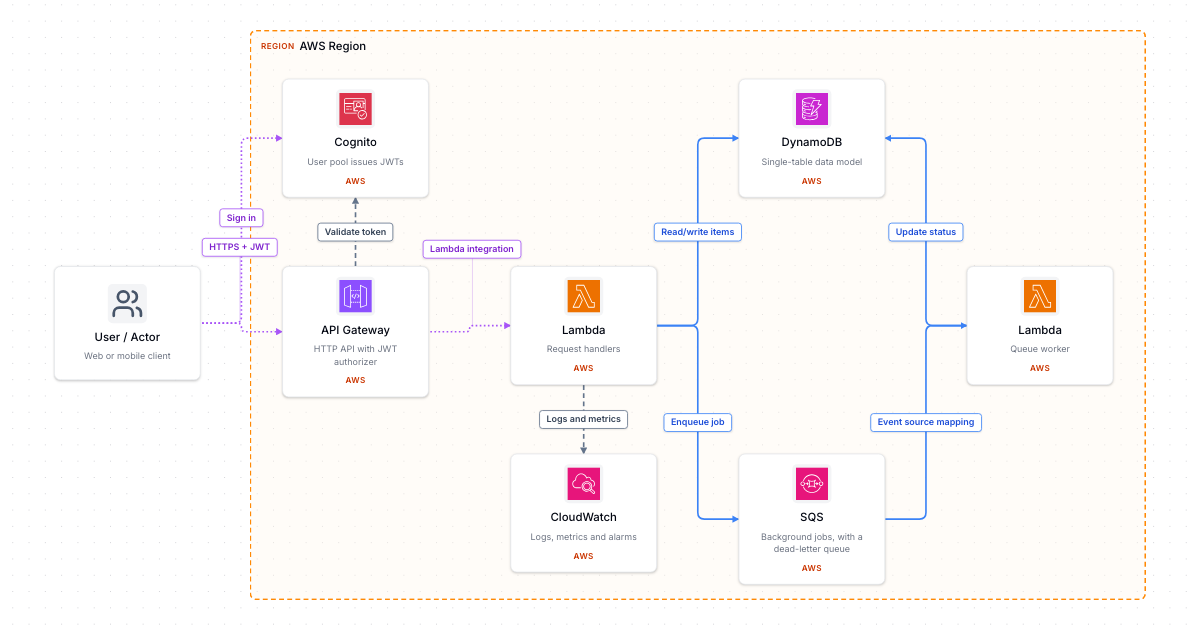
AWS serverless API
API Gateway with a Cognito JWT authorizer, Lambda handlers, DynamoDB storage and an SQS queue for background jobs.
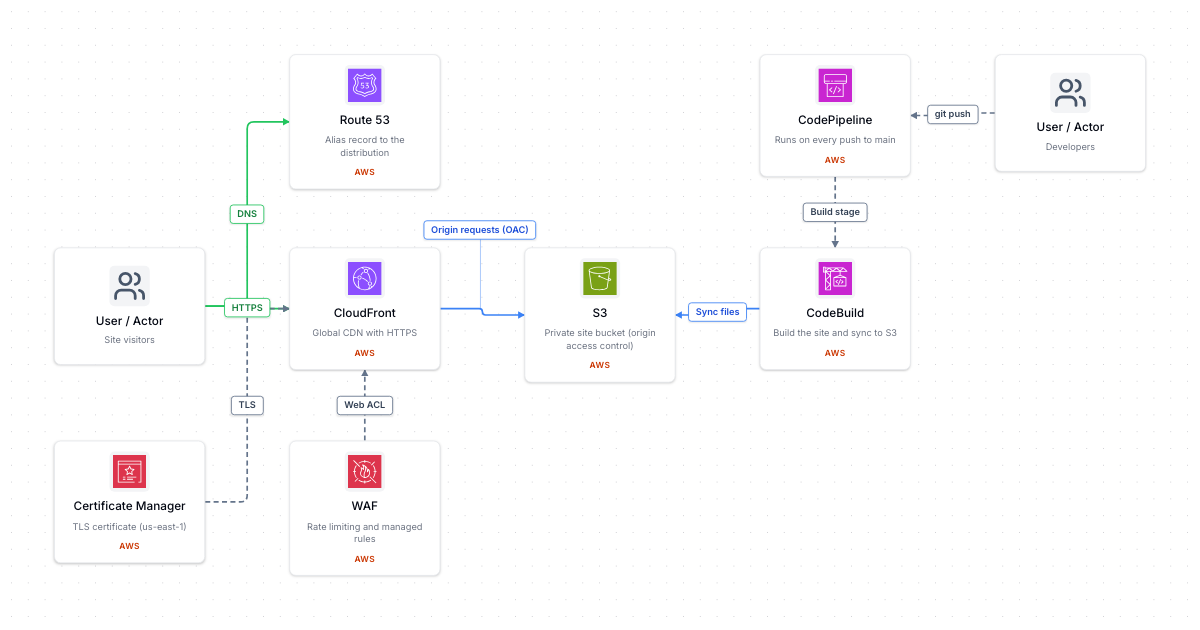
AWS static website with CloudFront
Private S3 bucket behind CloudFront with origin access control, ACM, WAF and a CodePipeline build that deploys on push.
Make it your own
Open a copy in the editor, then rename, rearrange and extend it.